
How Water Shapes Experiences in the Bighorn National Forest
If you’re going out in the Bighorns, you’re going to want to check the weather. Because the presence or absence of water fluctuates greatly in and around the Bighorn National Forest, and the level of the landscape’s water shapes our daily experience of the region.
For example, one of the best things about backpacking in the Bighorns is the area’s abundance of clean, running water. The mountains are striped with small streams, allowing hikers to often bring only about two liters of water carrying capacity, and often only needing to have a liter of water full at any time, since they are almost never more than a couple of miles from their next stream crossing. This allows for a light backpack, and a relaxed hiking environment.
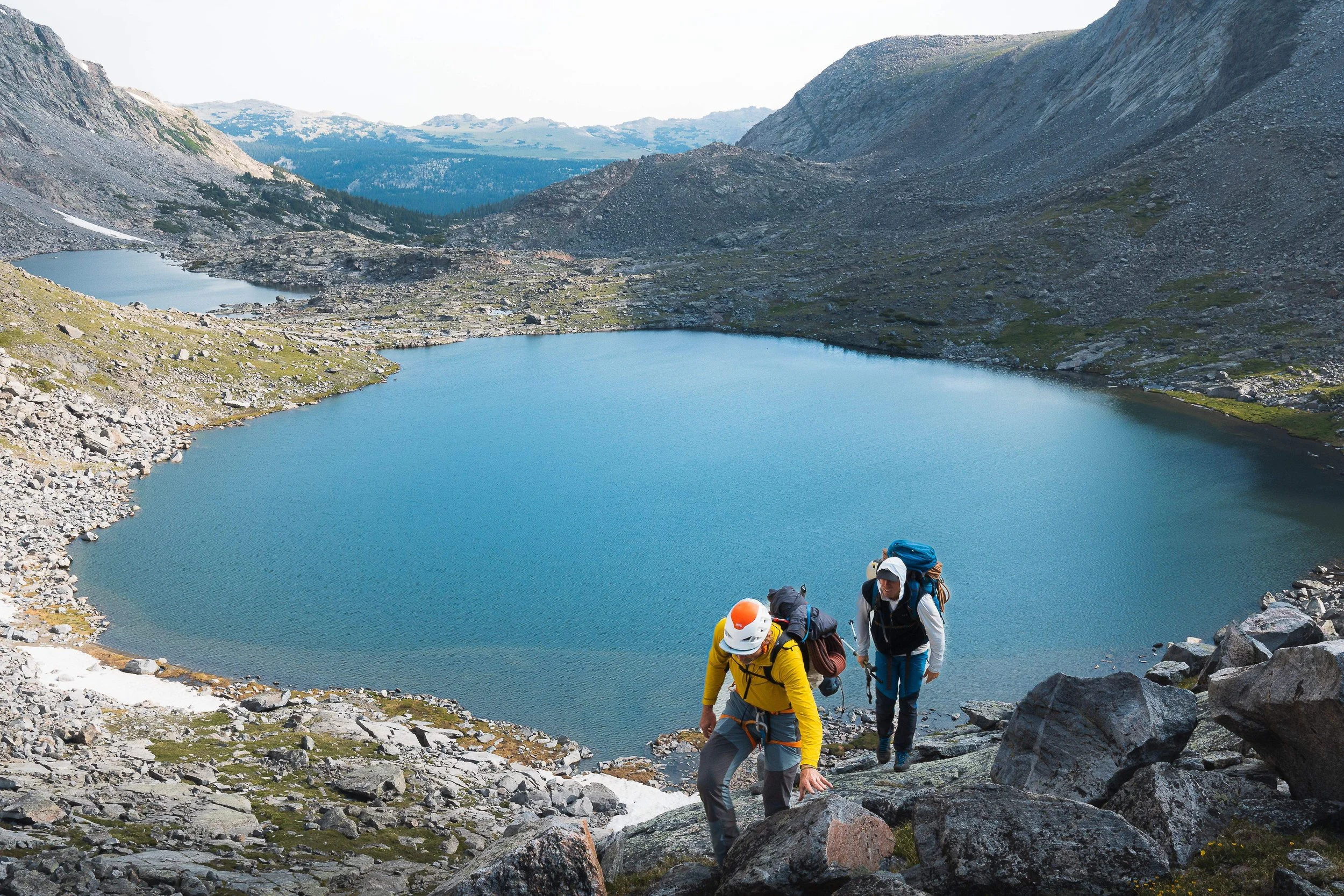
An alpine lake on the approach to Blacktooth Mountain. Even at high elevations, there is often abundant water in the Bighorns.
The flip side to abundance of water is high stream levels, which can necessitate tricky crossings by car or foot. It also necessitates the carrying of full rain gear — both a jacket and pants — during overnight trips.
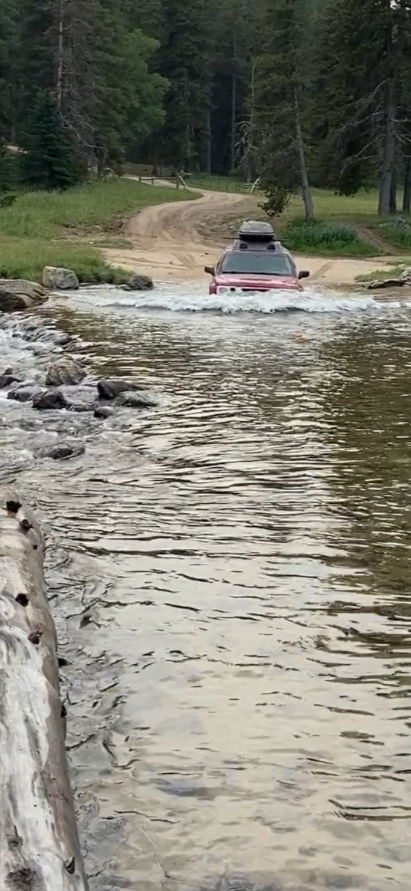
Crossing Big Goose Creek in the Bighorns can be tricky during years of high precipitation. This photo was taken during July of 2024, which was a particularly wet season.
In spring, when runoff from winter snows flood the rivers, access to certain areas in the Bighorns can be tricky, if not impossible. Even low elevation areas that have little approach, like Piney Creek, can become inaccessible due to spring runoff levels, or reservoir release. This is one reason of many why we only host certain trips in August.
Streams are at their highest in spring and early summer, then flow rates subside as summer turns to fall, opening more terrain to outdoor enthusiasts.
Along with winter snow, storms impact stream level. Spring and early summer in the Bighorns can be quite wet, often with regular rains in the afternoon. Sometimes, hikers can literally walk around or out of the way of small downpours, or avoid by a whole system by driving to higher or lower elevation.
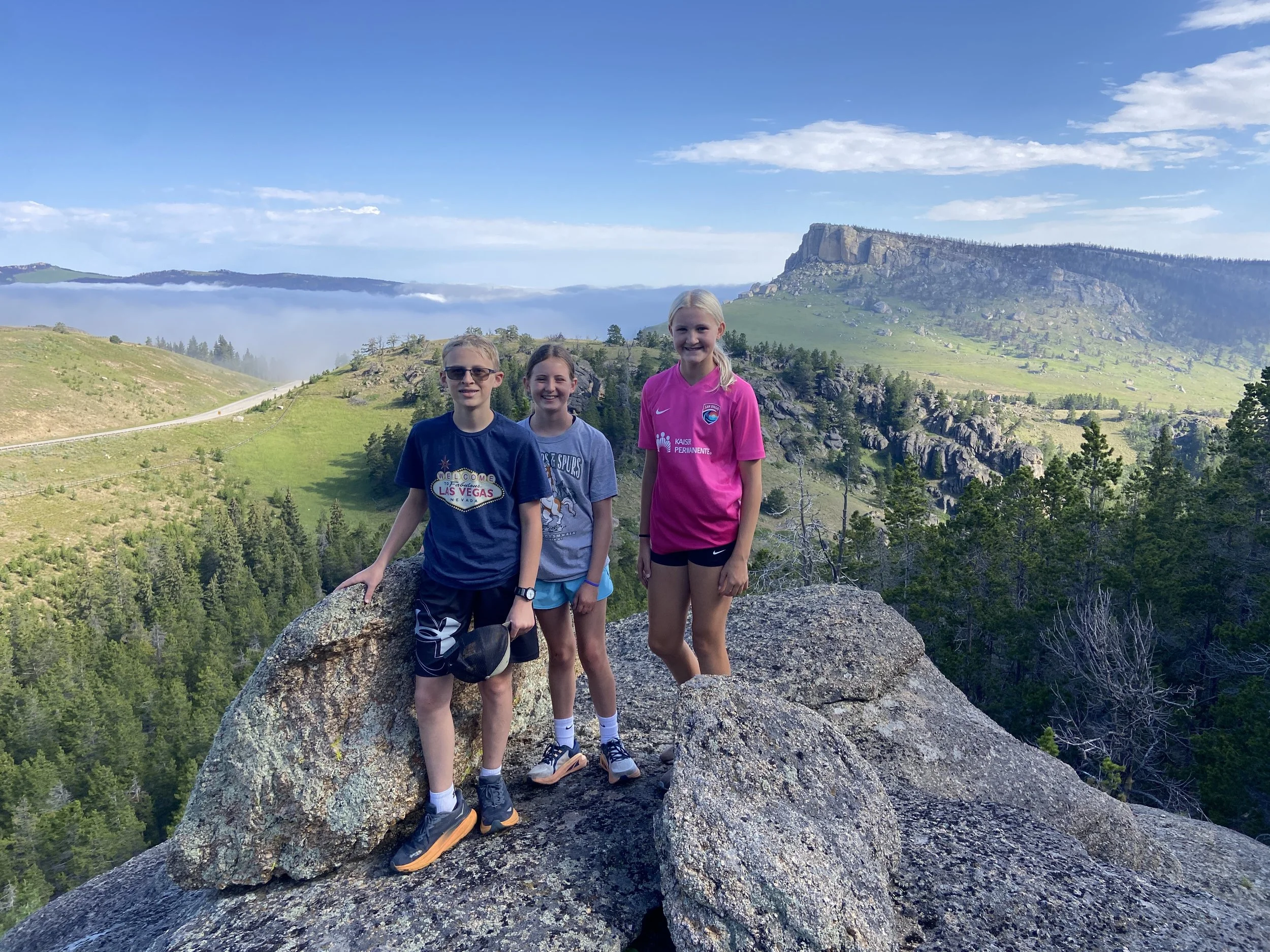
Participants in one of BMG’s youth camps pose on a rock, with Steamboat Point in the background to the North East where a cloud layer lies in the valley. On this day we were able to avoid a stratus storm by driving above it.
Unlike the Sierras in California, The Bighorn Mountains do not create a significant rain shadow on their eastern side. Often, storms with gather and crescendo over the Cloud Peak Wilderness, but will continue to fall over Sheridan, Story and Buffalo, feeding the lush meadows and grasslands on the eastern side. This is ideal grazing for livestock (one of the area’s main industries and reasons for being established as towns), and creates beautiful, healthy ecosystems for wildlife and wildflowers.
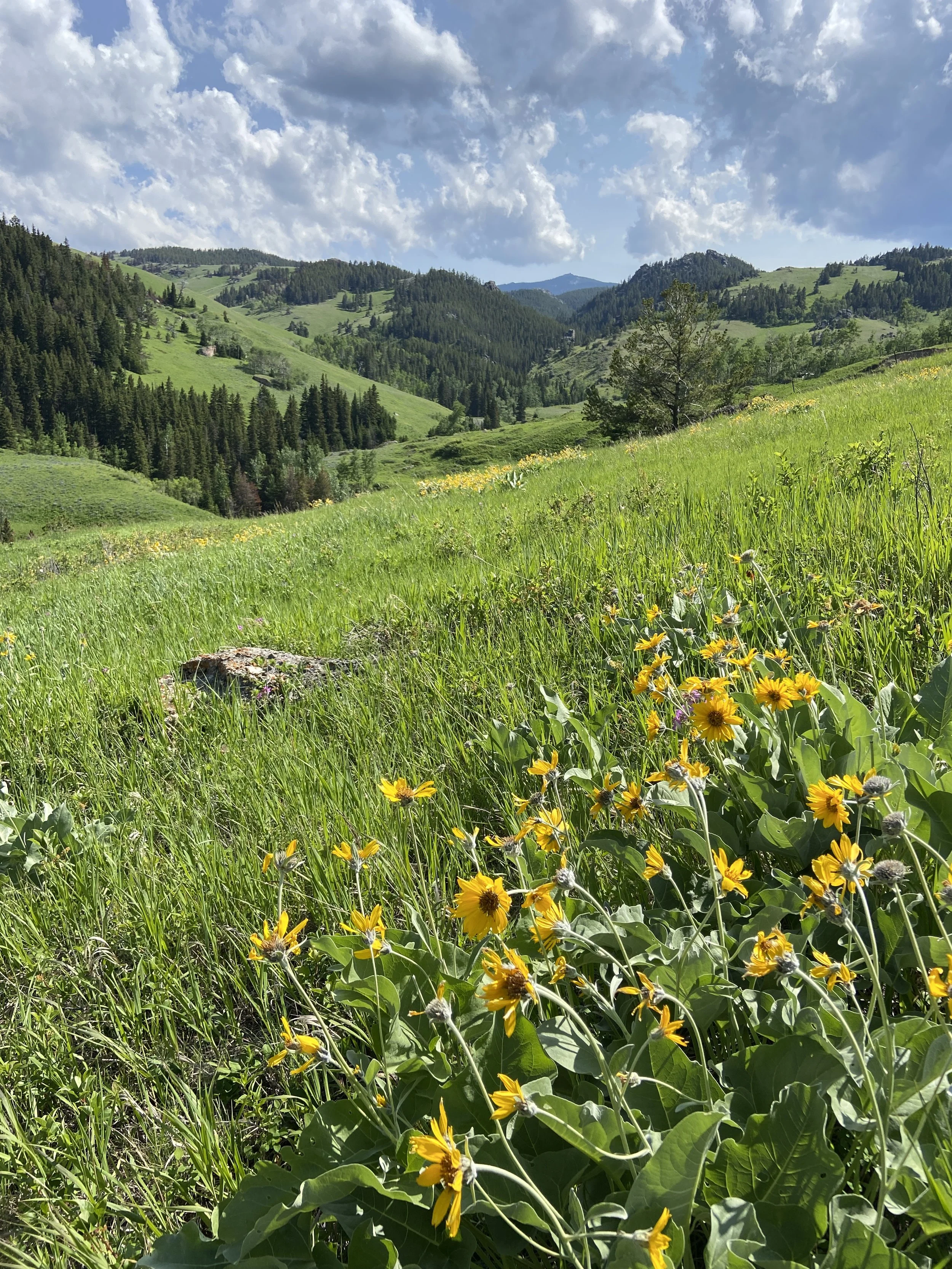
Spring at Little Tongue
The Bighorns do not form a significant rain shadow, allowing rains to create lush grasslands and meadows all along the Bighorns.
While August is usually the most stable month in terms of weather in the Bighorns, in the alpine it can rain, hail, or even snow during any month of the year. For this reason we often recommend booking an extra day on mountain objectives, and recommend purchasing travel insurance. Because when the environment gets wet, travel becomes much more difficult. This manifests in simple ways like the trail becoming muddy, but can also create unexpected hazards, like the way lichenous rock becomes extremely slick, giving them the texture of algea, even in places far from constant water sources.
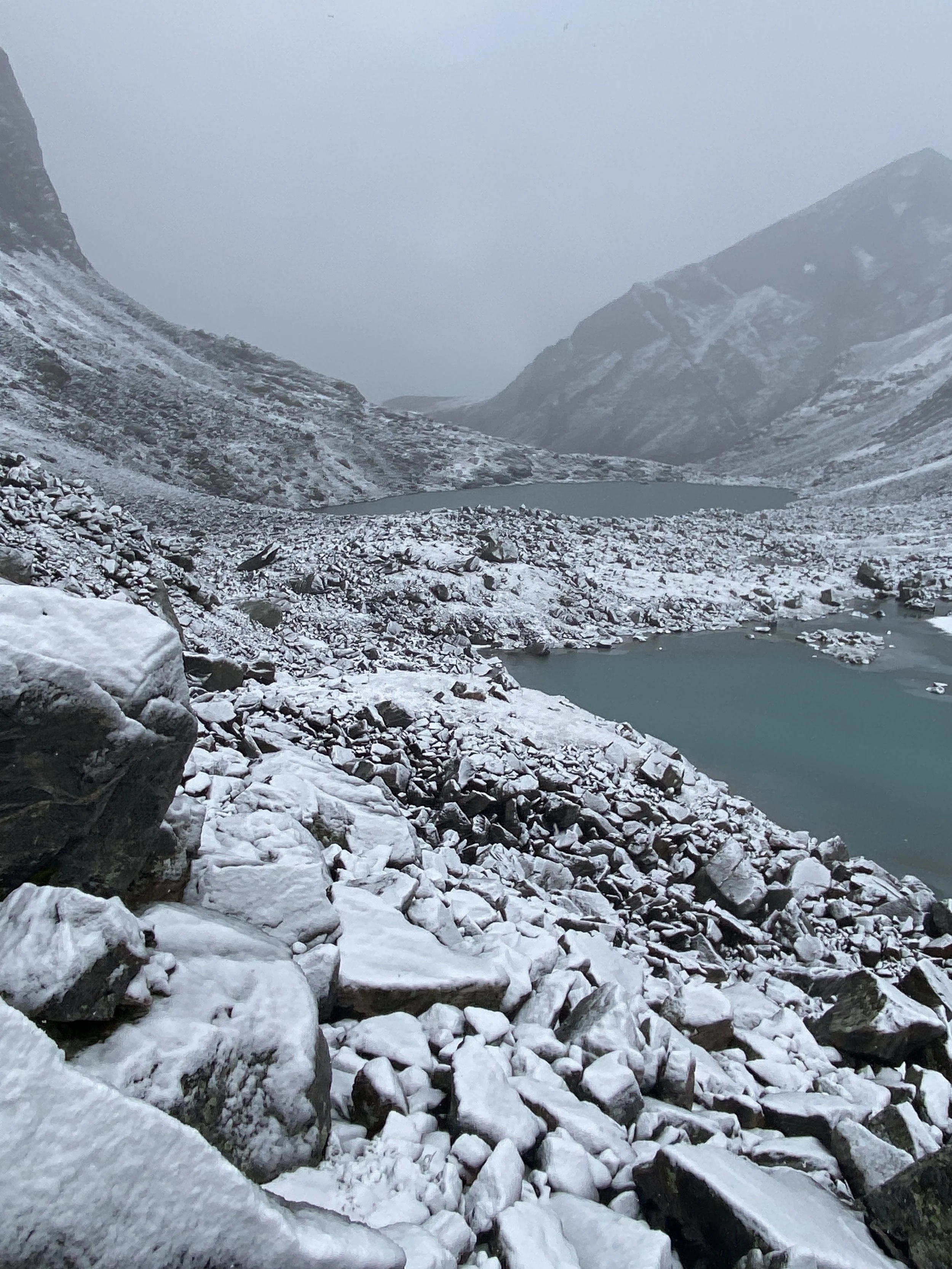
A late august snow covers the Sawtooth Lakes area in 2024. Two hours later it was gone.
Once storms pass, they often leave beautiful, clear air and verdant scenes in their wake. Grasses are greener, the skies bluer, rocks are washed clean and generally the landscape has a clear, vivid look. This is another silver lining of precipitation. It can create incredible views.
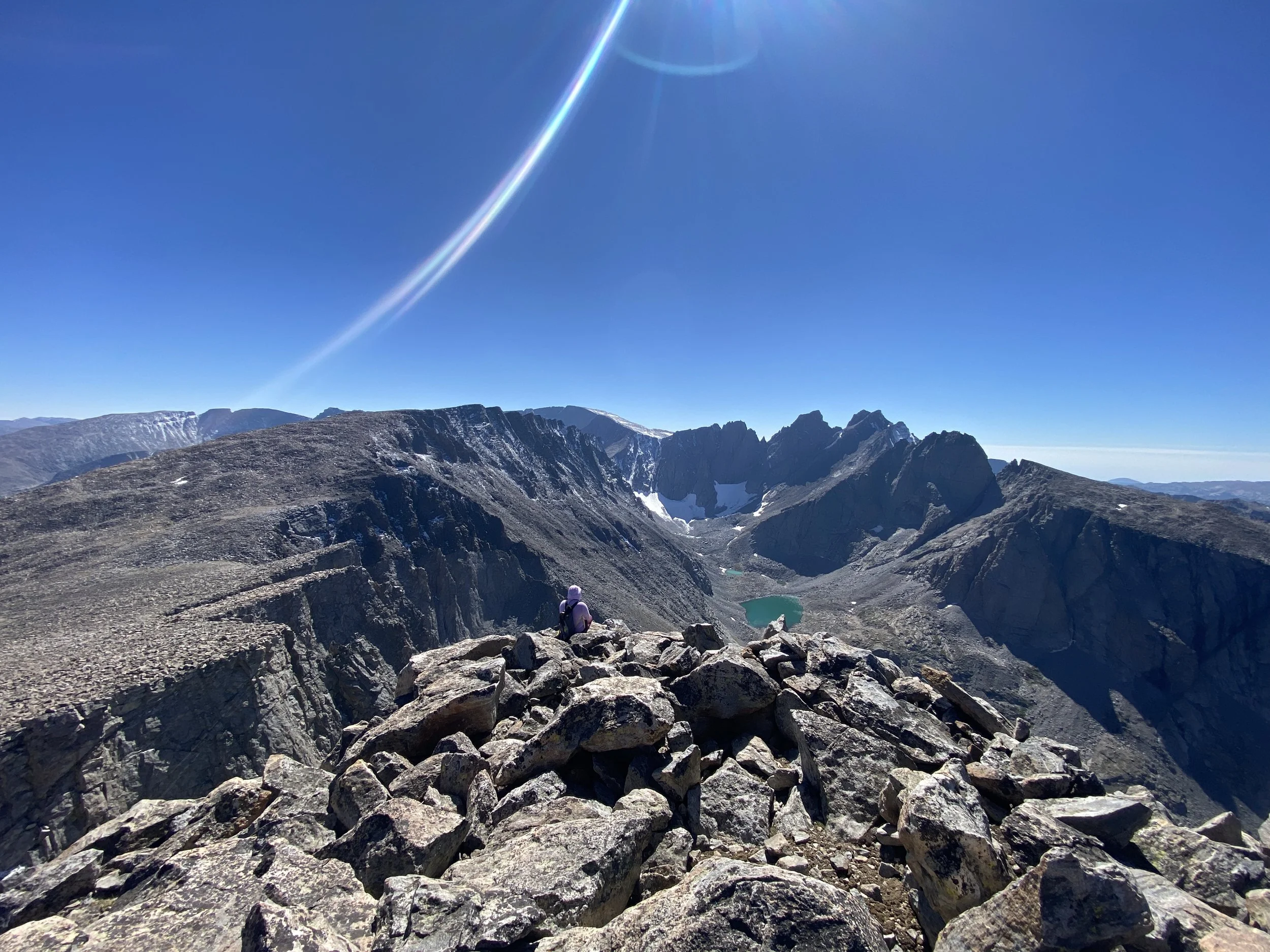
The day after snow, in 2025, views from the top of Penrose Peak were unparalleled in their clarity.
During dry seasons, smoke from wildfires in Canada and the Pacific Northwest can have the opposite effect. Paradoxically, this smoke can sometimes dim the light, and cool the air, creating an odd twilight.
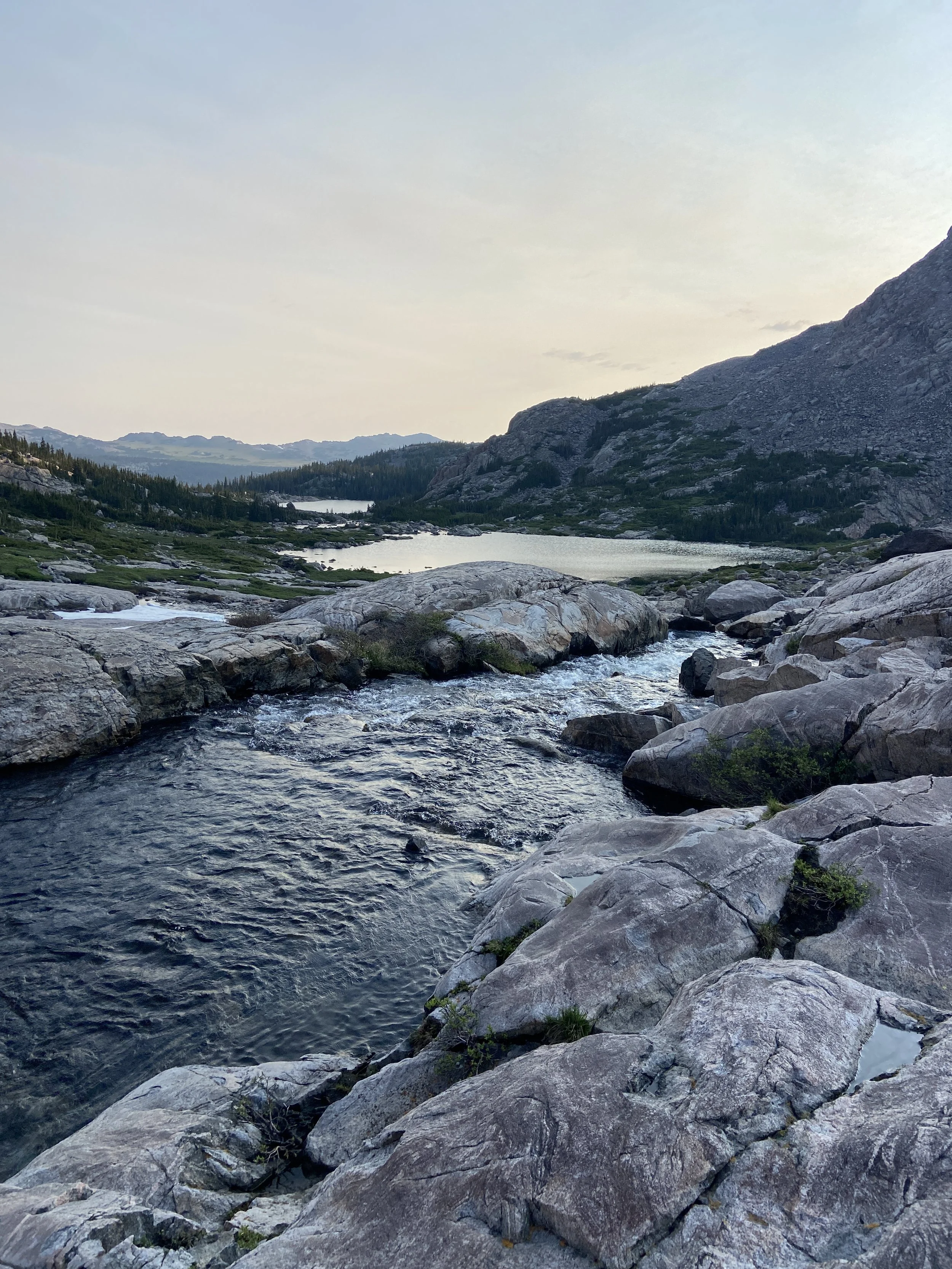
During a hazy day in the Bighorns, the atmosphere can be cool and mimic twilight.
Lastly, storms and precipitation create incredible cloud formations. Though an considered as ancilary activity for our guests, cloud watching in the Bighorns is not only mandatory for guides, but its also beautiful and unique. The Bighorns sometimes show off so much that they make news for their unique cloud shapes. Moments like this sound mundane, but they can shape the way we experience a day, the way we think about the environment, and can cement a place in our memory for years to come.
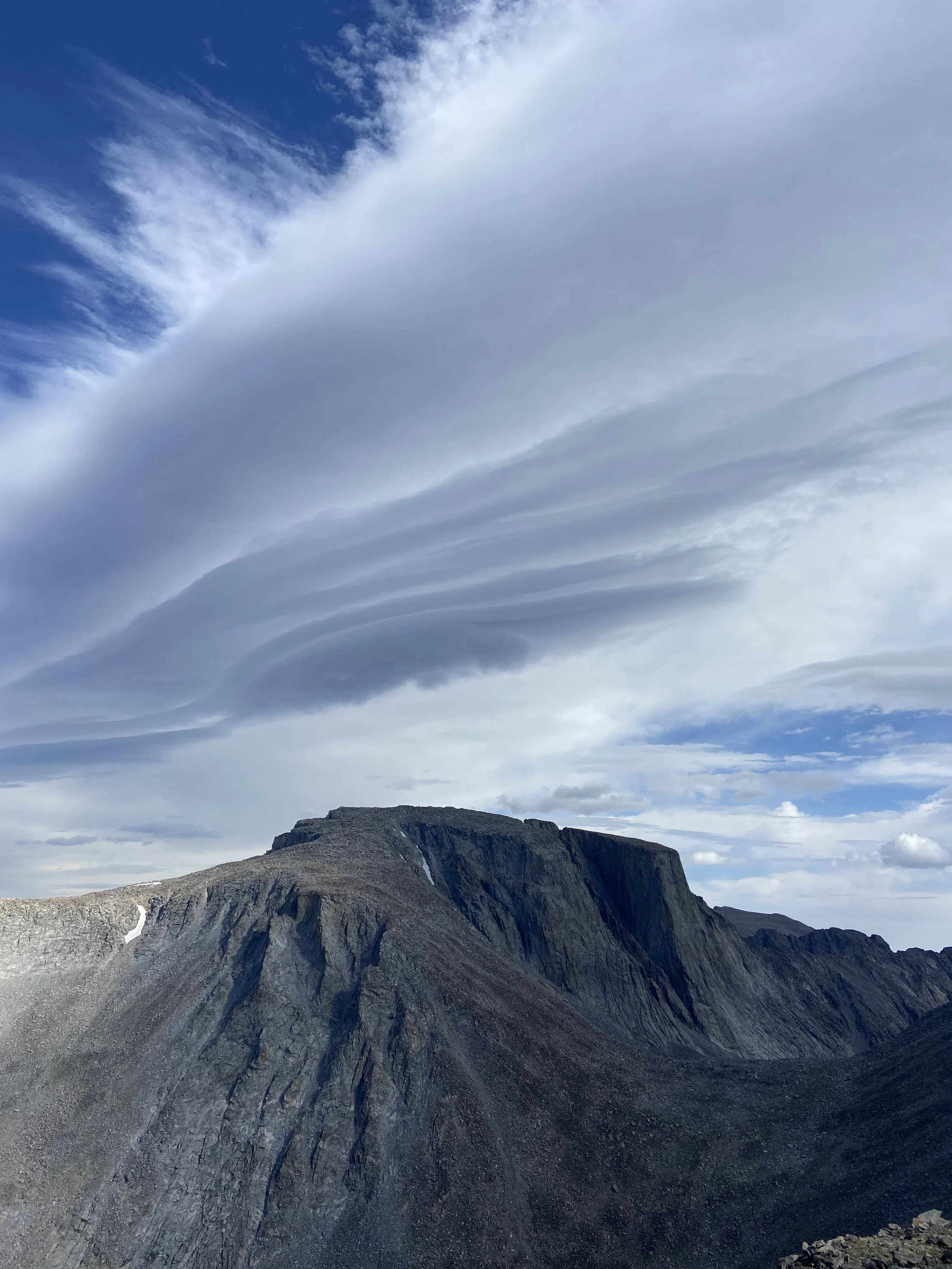
Clouds over cloud peak.
Precipitation in the Bighorns also allows for another underrated mountain activity: swimming. The Bighorn Mountains are full of incredible swimming venues. For those who enjoy a cold plunge, there are hundreds of options available, from ice-bath alpine lakes, to sunny little streams. These are great for cooling off and soaking the legs after a long hike or climb.
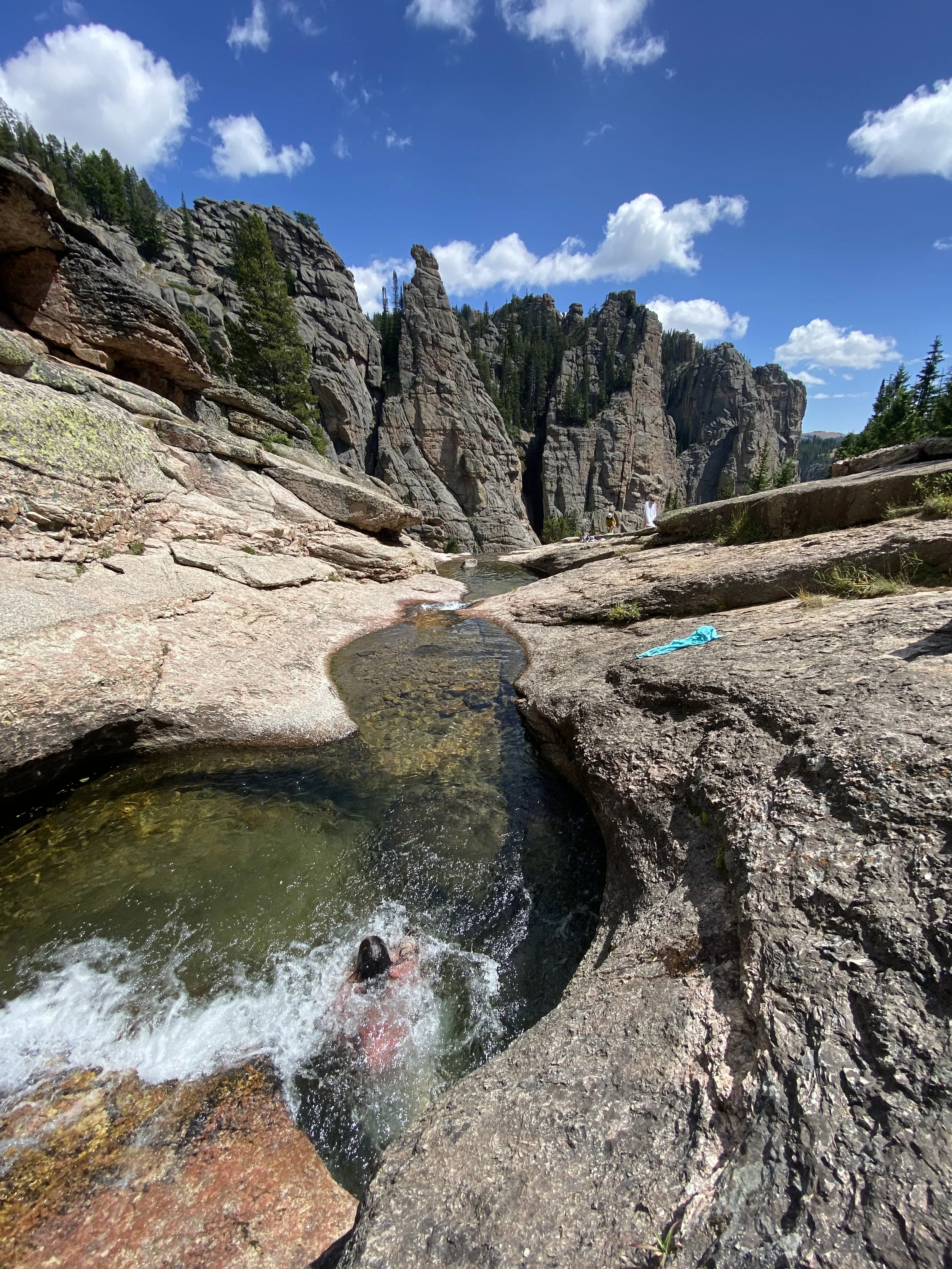
A hiker taking a cool dip on a hot day at a swimming hole in the Bighorn Mountains.
Precipitation in the Bighorns can create incredible experiences, beautiful landscapes and cement a place in our memory. It can give us lighter packs, or alter our objectives, or provide us with a place to cool off before tucking into our tents. No matter what season you visit the Bighorns, water will play a big roll.