
Piney Creek Canyon: The Eastern Bighorns’ No. 1 Sport Climbing Destination
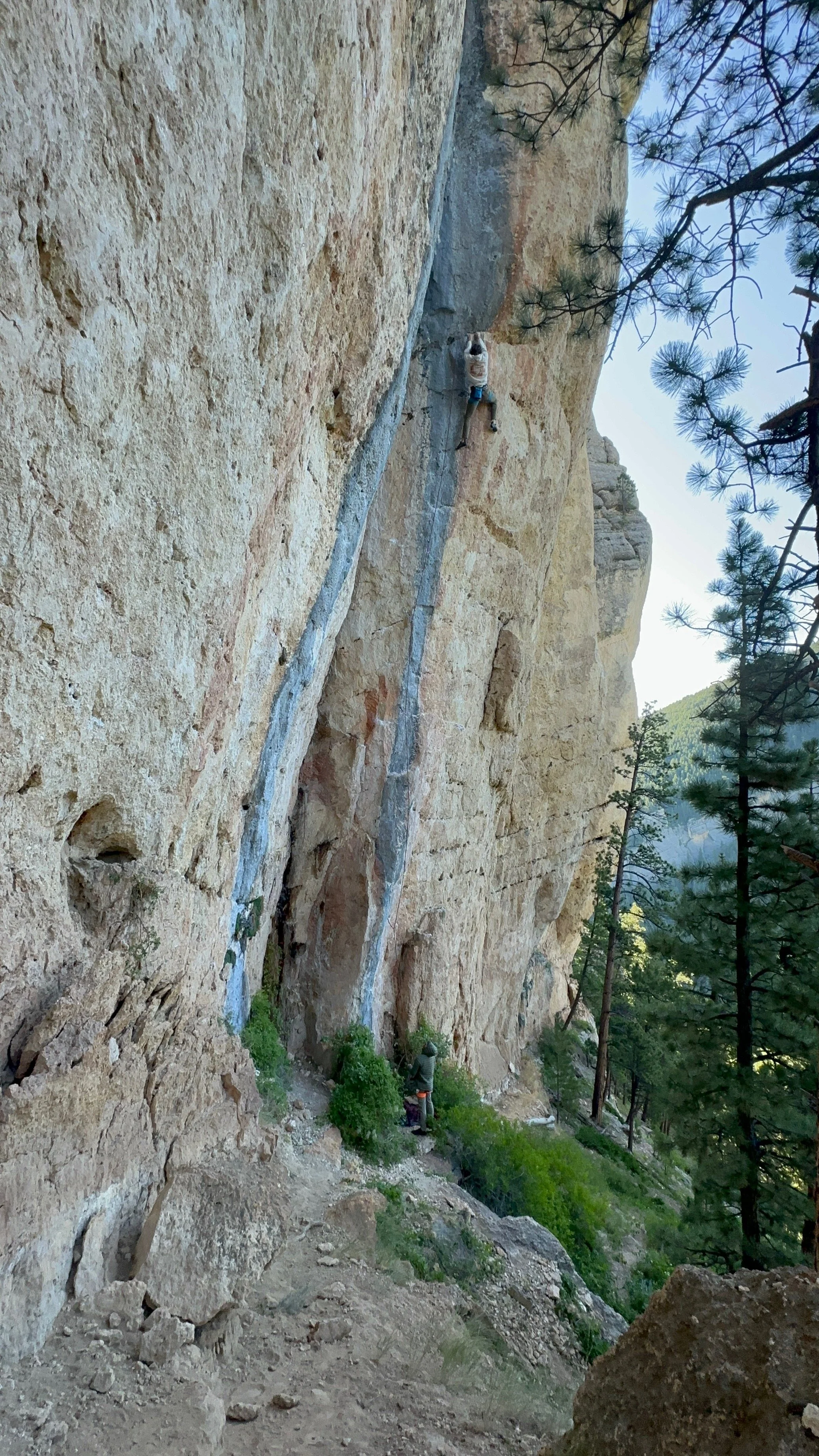
Climbers on Tanner’s Purpetual Motion Machine in Piney Creek Canyon’s Shipyard.
Piney Creek Canyon, located in Story Wyoming, is the best sport climbing area in the eastern Bighorns. It’s the local after-work climbing area for residents of Story, Sheridan and Buffalo, Wyoming, but it also happens to have some of the best sport climbing terrain in the entire range, generally.
The Bighorn Dolomite formations in Piney Creek range from slab to overhanging, and are speckled with classic limestone pockets similar to those that made Ten Sleep famous among sport climbers. But it also has small crimp lines that run up tall, vertical faces, and overhanging routes that force the climber to haul themselves up between ample, sometimes bucket-like holds. The combination of pockets and jugs in the area was noted by local developer and guidebook author Trevor Bowman, who called this medley “pugs” (a portmanteau of pockets and jugs) and named one of the routes in the area “pug addict”. This style is very fun and beginner friendly, and is therefore one of the areas Bighorn Mountain Guides brings its guests to the most.
The canyon is easily accessed via a 15 minute hike up a broad path at the end of Thorne Rider Road (here’s a pin to the parking area. There is no overnight parking here). The first routes one reaches are at the trailside crag, which is right by South Piney Creek itself. From there the grades of the routes generally become harder as the trail winds its way along the cliff-band, through the ponderosa forest and up to the tall, tan upper walls.
For advanced climbers, The Shipyard is a great early morning destination. This area, which stays shaded until around noon, features some of the canyon’s steepest climbs, and its highest concentration of difficult routes stiffest grades, which start with warm-ups like Hera (11c) to a suite of classic 5.12s (try Big Blue, Tanner’s Perpetual Motion Machine, or The Kraken!) and a few 5.13s.
A good deal of the area was developed in the early 2000s by Trevor Bowman, then a second wave of developers, many of whom can be seen climbing there to this day, brought the canyon largely to its current state with their efforts between 2010 and 2018 (after which the bolting ban came into effect).
If the Forest Service’s Climbing Management Plan is ever issued (some have suggested this summer could ACTUALLY be the release date), then the bolting ban will be lifted and more development will continue in this beloved zone.